
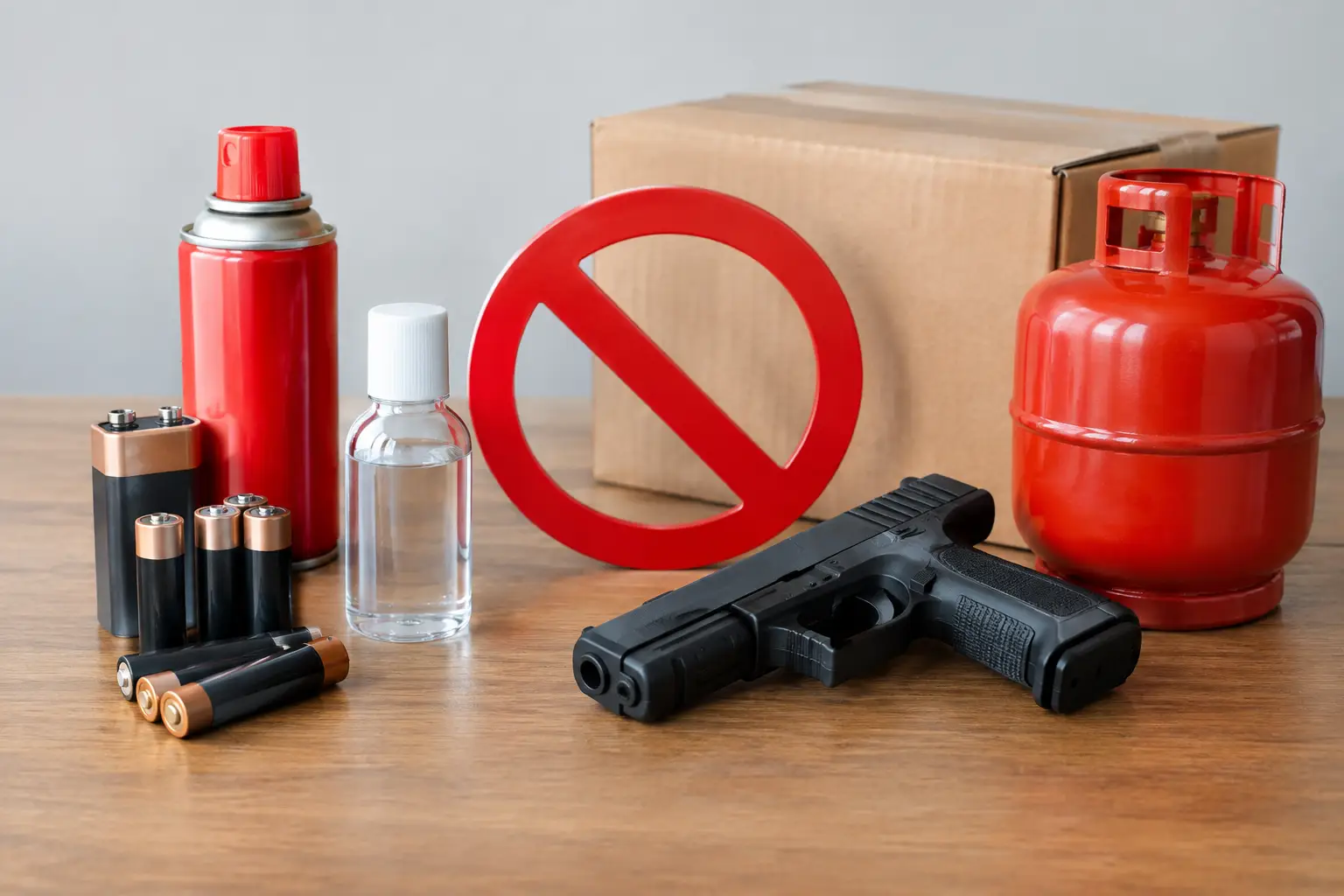
A packed suitcase, a moving box, or a commercial pallet can be refused long before it reaches its destination if it contains shipping prohibited items. The issue is not limited to obvious hazards. Everyday belongings such as lithium batteries, perfume, cleaning products, food, and medications may require special handling, paperwork, or may be refused entirely depending on the transport method and destination.
For international shipments, carriers, airlines, ports, customs authorities, and destination-country regulators each apply their own rules. A shipment accepted for ocean freight may not be accepted by air freight. An item permitted for export from Canada may still be restricted or prohibited at the destination. Checking early protects your schedule, your budget, and the belongings you are sending.
What Are Shipping Prohibited Items?
Prohibited items are goods that cannot legally or safely travel through a particular shipping service. Restrictions may come from transportation safety rules, customs regulations, carrier policies, sanctions, or import controls in the receiving country.
The word prohibited can be misleading because it is not always absolute. Some goods are prohibited from courier or air transport but may move by ocean freight when properly declared and packed. Others can travel only with permits, professional dangerous-goods handling, or destination approval. A reliable freight forwarder reviews the item, route, shipping mode, and paperwork before cargo is booked.
For people shipping personal effects, the main concern is often that a household item does not look risky until it is inspected. For businesses, the concern is broader: product classification, labeling, safety data, licensing, and whether goods can clear customs at both ends of the route.
Common Prohibited and Restricted Items
The following categories commonly create problems in international freight, excess baggage, and courier shipments. Rules differ by carrier and destination, so this is a practical starting point rather than a final clearance decision.
- Explosives, fireworks, ammunition, flares, and combustible materials are generally prohibited or tightly controlled.
- Flammable liquids and gases, including fuel, paint thinner, propane cylinders, butane lighters, and some aerosols, are hazardous cargo.
- Lithium batteries, power banks, e-bikes, scooters, and devices with damaged or undeclared batteries may be refused, especially by air.
- Illegal drugs, cannabis products, controlled substances, counterfeit goods, and items connected to criminal activity are prohibited.
- Weapons, pepper spray, knives, tactical equipment, and firearm parts may require permits or may be restricted by destination laws.
- Perishable food, meat, dairy, plants, seeds, soil, animal products, and untreated wood can trigger agricultural controls or quarantine requirements.
Alcohol, tobacco, perfume, nail polish, cosmetics, medication, and cleaning products are also frequent sources of delays. They may be allowed in limited quantities, but their ingredients, volume, packaging, tax treatment, or import status can change the answer.
Why household goods are often flagged
When preparing a move, customers commonly pack garages, bathrooms, workshops, and kitchen cabinets without reviewing every item. That is where undeclared paint, aerosols, pesticides, pool chemicals, batteries, or fuel-powered tools are often found.
A lawn mower, generator, motorcycle, or vehicle may be transportable, but it must be prepared properly. Fuel levels may need to be reduced, batteries may need to be secured or disconnected, and the equipment must be clean enough to meet destination biosecurity standards. Soil, grass, insects, and plant residue can be as serious a clearance issue as fuel.
Air Freight, Ocean Freight, and Courier Rules Are Different
Air freight has the strictest rules for many dangerous goods because pressure, temperature, and fire risks are more difficult to control in flight. Loose lithium batteries, aerosol cans, and flammable products are especially sensitive. Never assume an item is acceptable in checked luggage simply because it fits inside a shipping carton.
Ocean freight can accommodate certain regulated goods when they are correctly classified, packed, labeled, documented, and accepted by the carrier. This does not mean ocean freight is a workaround for undeclared hazardous cargo. Incorrect declarations can lead to cargo holds, penalties, port refusal, container unloading costs, and damage claims.
International courier services are built for speed, which means they often have tighter item limits and less flexibility for unusual goods. A courier may reject a package that a specialized freight arrangement could handle. If timing matters, ask about the item before packing it, not after the pickup is scheduled.
Customs Prohibitions Can Be Separate From Carrier Rules
A carrier may be willing to transport an item, while customs may refuse it at the border. This happens often with food, plants, medicines, wildlife products, cultural artifacts, and branded merchandise.
For example, commercially packaged food is not automatically acceptable everywhere. Some countries restrict meat, dairy, honey, fresh produce, spices, or products containing seeds. Prescription medication may require original packaging, a copy of the prescription, or limits on the quantity being imported. A wooden carving, fur garment, or leather item may need additional documentation if protected species regulations apply.
Country-of-origin rules also matter for commercial shipments. Import duties, product standards, labeling requirements, sanctions, and local licensing can affect whether merchandise is cleared. Declaring a shipment as personal effects does not remove customs requirements if the contents are new, numerous, or intended for resale.
Do not rely on vague descriptions
Descriptions such as miscellaneous items, gifts, household supplies, or personal goods can delay a shipment because they do not tell customs or the carrier what is actually inside. A proper inventory should identify the item, quantity, approximate value, and condition. For regulated products, it may also need the material, brand, model, battery type, or chemical information.
Accurate descriptions protect the shipper. They allow the freight provider to identify restrictions early and prepare the correct documents when the shipment is eligible to move.
What Happens If a Prohibited Item Is Found?
The outcome depends on the item, transport stage, and applicable law. In the simplest case, the item is removed before collection or returned to the sender. Once cargo is in transit, the consequences can become more costly.
A shipment may be held at a warehouse, airport, port, or customs facility while inspectors review it. The sender may be charged for storage, inspection, repacking, return transport, or disposal. Intentional misdeclaration can lead to fines, insurance denial, account restrictions, and legal consequences.
There is also a practical human cost. One overlooked bottle of fuel additive or undeclared power bank can hold up an entire household shipment. If you are relocating for work, sending student belongings, or moving commercial stock for a deadline, that delay can affect more than one box.
How to Check Your Shipment Before Booking
Start with a room-by-room or pallet-by-pallet review before you seal cartons. Set aside anything with a battery, liquid, pressurized container, chemical ingredient, fuel source, blade, weapon-related component, food product, medicine, or plant material. These items deserve a specific clearance check.
Next, consider the route. Are you shipping by air, ocean, courier, or truck? Is the shipment traveling from Canada to France, Australia, South America, or another destination with strict biosecurity or import rules? The correct answer depends on all of these factors.
Be prepared to provide clear photos, product labels, safety data when available, battery specifications, and an honest packing list. For commercial cargo, include invoices, product descriptions, and any permits or certificates already obtained. Do not hide an item inside a box or leave it off the inventory in the hope it will pass unnoticed.
E-Cargo Inc. can review shipment details before transport is arranged, helping customers identify items that must be removed, handled differently, or documented before shipping. That early review is particularly valuable for personal effects, vehicles, machinery, excess baggage, and mixed commercial cargo.
Safer Packing Starts With Better Decisions
Packing safely is not only about using strong boxes. It starts with deciding what should not go into the shipment at all. Dispose of hazardous household products through an approved local program, carry permitted essential medications according to airline and destination rules, and purchase restricted products after arrival when practical.
For items that can be shipped, use secure packaging that prevents leaks, movement, and damage. Keep original packaging for electronics and batteries where possible. Separate documents from cargo, but provide complete copies to the freight team when customs paperwork is required.
Before you book, ask direct questions about any item that seems unusual. A quick review can prevent a refused pickup, missed sailing, delayed flight, or customs hold. Get a Quote Now with a detailed packing list, and you can make informed shipping decisions before your belongings begin their journey.