
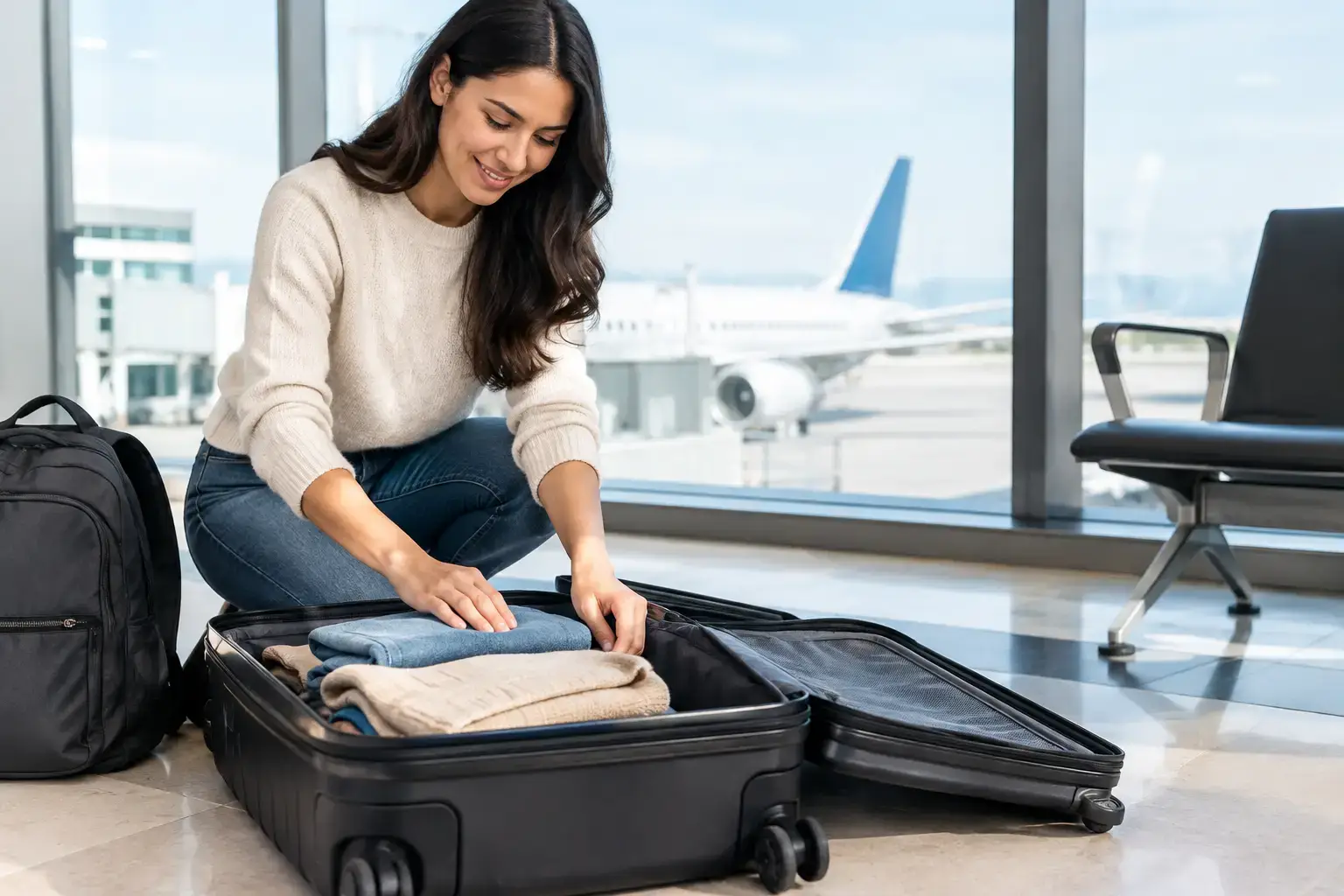
A suitcase that is only a few pounds over an airline limit can become an expensive problem at the check-in counter. For international travelers, students, families relocating abroad, and professionals carrying more than a week’s worth of belongings, the best way to avoid airline excess baggage fees is to plan before arriving at the airport. Airline charges can rise quickly when a bag exceeds the permitted weight, size, or number of checked pieces.
The key is not simply packing less. It is choosing the right transport method for each item, understanding the fare rules attached to your ticket, and separating what must travel with you from what can be shipped safely ahead. That approach can protect your travel budget and make arrival easier.
Why airline baggage fees add up quickly
Most airlines set limits based on three factors: the number of checked bags included with the fare, the weight of each bag, and the bag’s overall dimensions. A traveler may assume that a ticket includes two checked bags, only to find that the lowest fare category includes one bag or none at all. Even when a checked bag is included, it may be limited to 50 pounds for economy passengers, while a heavier allowance may apply only to premium cabins or certain loyalty members.
Excess charges are often applied per bag and per flight segment. That means a Toronto traveler connecting through a European airport may face a different charge than someone flying nonstop. Fees can also be substantially higher at the airport than when baggage is added online in advance.
Overweight and oversized are separate categories. A suitcase can be within the allowed weight but still trigger an oversized fee because of its total linear dimensions. On some routes, a bag above a certain weight may not be accepted as checked luggage at all, leaving passengers to repack at the counter or arrange cargo service on short notice.
Check the rules attached to your specific ticket
Do not rely on a general airline baggage policy found in an old email, a search result, or advice from another traveler. The applicable allowance depends on your route, cabin class, fare family, airline status, and sometimes the marketing carrier listed on the ticket.
Review the baggage allowance shown in your booking confirmation as soon as you buy the ticket. Then verify the airline’s current rules a few days before departure, particularly if your itinerary includes a codeshare flight. The carrier selling the ticket and the carrier operating the longest flight may have different policies, and the governing rule is not always obvious.
If you expect to bring more than your allowance, price the options early. Prepaying for an additional checked bag may be less expensive than paying an overweight charge. However, that is not always the best value. A traveler with one extra 50-pound suitcase may be better served by shipping that bag as personal effects, especially when the contents are not needed immediately upon landing.
Weigh and measure bags before packing day
A reliable luggage scale is one of the simplest tools for avoiding unexpected charges. Weigh each suitcase after it is fully packed, including locks, straps, and external pockets. Bathroom scales can work for larger bags, but use the same scale consistently and leave a small margin below the airline maximum. A suitcase that weighs exactly 50 pounds at home can weigh more at the airport after you add a jacket, travel documents, or a last-minute gift.
Measure height, width, and depth, including wheels and handles. Soft-sided bags can expand when overfilled, which is why forcing extra clothing into exterior compartments can create an oversized-baggage issue. Hard-shell cases provide more predictable dimensions, but they can be heavier before you pack a single item.
Pack by weight, not by room
Heavy, compact belongings cause most overweight-bag surprises. Shoes, books, tools, glassware, and dense personal items should be spread across several bags rather than concentrated in one suitcase. If you are traveling with a companion, balancing weight between both travelers’ included allowances can help, provided each person is checking in and traveling on the same reservation rules.
There is a trade-off. Splitting goods into more suitcases can avoid overweight fees but create a charge for an additional bag. Compare both outcomes before deciding. In some cases, one prepaid extra bag is the lower-cost option. In others, shipping several cartons separately is more practical than managing multiple suitcases through a long international itinerary.
Use your carry-on allowance carefully
Carry-on space is valuable for small, heavy, and essential items. Electronics, medications, important documents, jewelry, camera equipment, chargers, and a change of clothes should generally remain with you. Moving a few pounds of dense items from a checked bag to a carry-on can keep the checked bag below the weight threshold.
Still, do not assume a carry-on is exempt from limits. Airlines may enforce restrictions on cabin bag size and personal-item dimensions, especially on full flights or smaller regional aircraft. Low-cost carriers may also charge for larger cabin bags or priority boarding. Weigh the cost of a carry-on upgrade against the cost of checking another bag, and account for the inconvenience of carrying it through connections.
Know when shipping personal effects makes more sense
Airline baggage works best for clothing and essentials you need immediately. It becomes less efficient when you are moving abroad, studying overseas for a semester, returning home after a long assignment, or transporting household goods. Excess baggage fees can be difficult to predict, and airline baggage services are not designed to coordinate customs clearance, storage, or door-to-door delivery of larger personal shipments.
Shipping personal effects separately gives you more room to plan around weight, timing, and destination requirements. Depending on the route and volume, air freight may suit urgent items, while ocean freight may be more economical for a larger relocation shipment. The right choice depends on how quickly you need the goods, what they contain, and whether you are sending a few cartons or furnishing a home.
For Canadians shipping from Montreal, Toronto, Calgary, Vancouver, Edmonton, or Mississauga to Europe, Australia, South America, or other destinations, E-Cargo Inc. can coordinate personal-effects shipping, packing, documentation, customs support, and final delivery. This is particularly useful when luggage includes items that are impractical to carry through an airport, such as extra clothing, books, household items, or unaccompanied belongings.
Avoid airline excess baggage fees with smarter booking
The cheapest airfare is not always the cheapest trip. Before selecting a basic fare, calculate the full cost after checked bags, seat selection, carry-on restrictions, and possible excess weight are included. A standard economy fare with a better baggage allowance can cost less overall than a basic ticket plus multiple add-on fees.
Frequent-flyer status, certain travel credit cards, and premium-cabin tickets may include additional checked bags, but confirm the terms for international travel. Benefits can differ by route, airline partner, and ticket type. If you are flying one way as part of a move, remember that a card benefit may apply only when the ticket is purchased with that card.
If your plans are flexible, compare airlines based on total baggage value, not only the airfare displayed first. This matters most on long-haul routes, where checked-bag fees and overweight penalties can exceed the initial savings from a lower base fare.
Prepare for customs, not just check-in
Shipping or carrying belongings internationally involves more than weight limits. Certain goods may require declarations, permits, special packaging, or supporting documents. Food, alcohol, plants, animal products, medications, batteries, and high-value items can create delays if they are not prepared correctly.
Make a clear inventory of what you are carrying and what you are shipping. Keep purchase receipts or proof of ownership for valuable items where available. If you are moving personal effects, identify whether items are used household goods, gifts, commercial merchandise, or restricted articles. Accurate paperwork helps prevent customs problems that can cost more time and money than any airline fee.
A practical pre-flight baggage check
Before leaving for the airport, confirm these four details:
- Your exact checked-bag, carry-on, weight, and size allowance for every flight segment.
- The weight and dimensions of every suitcase after final packing.
- The price of prepaying extra baggage compared with shipping nonessential belongings separately.
- The customs status and documentation needed for items traveling with you or being sent ahead.
A little planning turns baggage from a stressful airport surprise into a manageable transport decision. Keep immediate essentials with you, send the rest using the method that suits your budget and timeline, and request a tailored shipping quote before excess baggage becomes an expensive last-minute charge.