
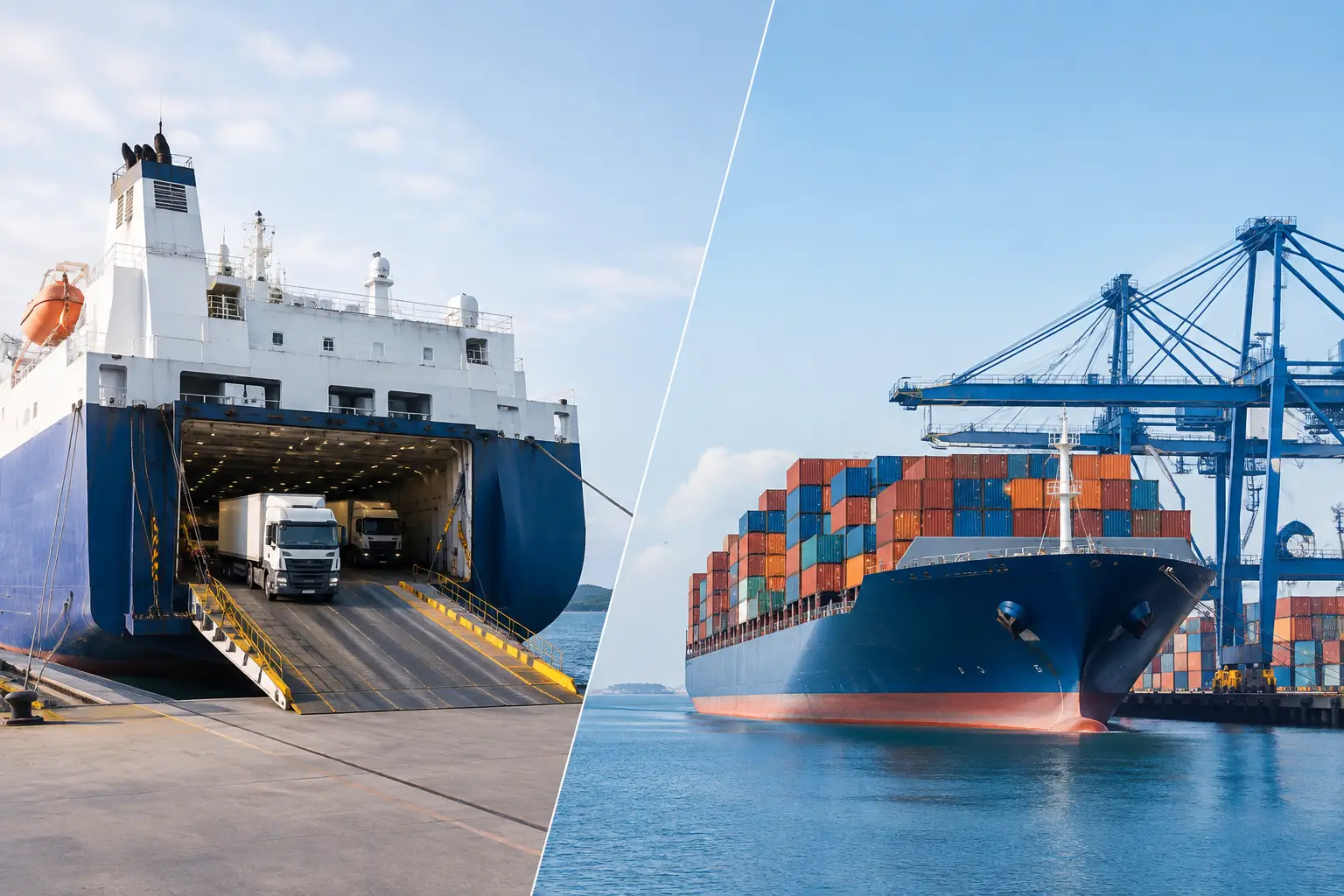
A vehicle can be ready to sail while one shipping decision still holds up the move: should it travel on a specialized vehicle vessel or inside a steel container? RoRo versus container transport is not simply a choice between two ocean freight prices. It affects how the cargo is delivered to port, how it is protected during transit, what may travel with it, and how the destination clearance is handled.
For Canadians shipping a car, SUV, motorcycle, construction equipment, or household goods overseas, the right answer depends on the shipment itself and the route. A lower ocean rate can be a good value, but only if the service matches the condition, timing, and destination requirements of your cargo.
What RoRo Transport Means
RoRo means roll-on/roll-off. Vehicles and wheeled machinery are driven, towed, or rolled onto a purpose-built vessel, then secured in an enclosed vehicle deck for the ocean voyage. At the destination, they are rolled off and released for collection or onward delivery.
This method is designed for operable vehicles. It is commonly used for passenger cars, pickup trucks, buses, trucks, tractors, excavators, and other self-propelled or towable machinery. Because the cargo moves directly onto the vessel rather than being loaded into a container, port handling can be straightforward on established RoRo routes.
RoRo generally requires a vehicle to be clean, safe to drive or tow, and compliant with the carrier’s fuel and battery rules. Most carriers also prohibit personal belongings inside the vehicle. That restriction matters for families relocating from Toronto, Montreal, Vancouver, Calgary, or elsewhere in Canada who hope to ship luggage, boxes, or household items with their car.
How Container Transport Works
Container transport places cargo inside a sealed shipping container, usually a 20-foot or 40-foot unit. A vehicle may be driven into the container and secured with lashing equipment, while non-running vehicles and machinery can be loaded using ramps, forklifts, or other specialized handling. Household goods, cartons, pallets, and spare parts can often travel in the same container when properly packed and declared.
A container can move as a full container load, often called FCL, when one shipper uses the entire unit. Smaller shipments may move as less-than-container load freight, or LCL, sharing container space with compatible cargo from other shippers. Vehicle shipping is more commonly arranged in a dedicated container when personal effects or higher-value items are involved.
The container is sealed after loading and usually remains sealed until it reaches the destination terminal or approved inspection point. That added separation can be valuable, although it does not remove the need for correct packing, customs documents, and cargo insurance.
RoRo Versus Container Transport: The Main Differences
The clearest difference is the kind of cargo each method handles best. RoRo is purpose-built for wheeled units moving between ports with regular vehicle-vessel service. A clean, operating car being sent to a port with a strong RoRo connection may be an efficient candidate for this option.
Container transport is more flexible. It can accommodate a vehicle plus declared personal effects, motorcycles, parts, commercial stock, or household goods. It may also be the practical choice for a classic car, a non-running vehicle, or machinery requiring more controlled loading arrangements.
Protection is another consideration. RoRo vessel decks are enclosed, and vehicles are secured for sea transit, but the vehicle remains accessible within the ship’s vehicle-storage environment. In a container, the cargo is packed, blocked, braced, and sealed inside its own unit. For customers shipping personal belongings, sensitive equipment, or a vehicle that needs additional separation from other port activity, that can provide greater peace of mind.
Neither method should be described as automatically safer in every circumstance. Professional loading, accurate cargo information, suitable insurance, and reliable origin and destination handling matter just as much as the ocean mode selected.
Cost: When Each Option Can Make Sense
RoRo can be more economical for a standard, operable vehicle because there is no need to rent and load an entire container. It can also reduce labor at origin when the vehicle is delivered to the departure port in acceptable condition. On busy vehicle routes, RoRo sailing schedules may offer useful frequency.
Container pricing is based on more than the container itself. The quote may include container positioning, loading labor, lashing materials, terminal handling, documentation, export clearance, and destination charges. A 40-foot container may cost more than RoRo for one vehicle, but its value changes when it carries a vehicle together with furniture, boxes, tools, or business inventory.
For example, a family moving from Canada to Europe may find that separate vehicle and household-goods shipments create more handling and coordination than one properly loaded container. On the other hand, someone exporting only a late-model sedan may prefer the simplicity of RoRo if no personal effects need to travel with it.
The lowest quote should always be reviewed carefully. Ask what is included at origin, at the destination port, and for final delivery. Ocean freight is only one part of the total transport cost.
Timing and Route Availability
RoRo depends heavily on vessel routes. Some destination ports have frequent services for vehicles, while others have limited sailings or no practical RoRo option. Inland collection and delivery can also add time when the nearest RoRo port is far from the shipper or consignee.
Container services reach a broader range of ports and can be routed through transshipment hubs. That flexibility is useful for destinations in Europe, Australia, South America, and markets where direct vehicle-vessel service is limited. However, container loading appointments, consolidation schedules for LCL freight, and destination deconsolidation can affect transit time.
If timing is critical, ask for the full schedule rather than only the vessel departure date. A complete plan should account for pickup, delivery to the port or warehouse, export processing, vessel cutoff, ocean transit, customs clearance, and destination release.
Customs and Documentation Do Not Disappear at the Port
Both methods require accurate paperwork. Depending on the destination, vehicle transport may require proof of ownership, a registration document, export authorization, a bill of sale, identification, and forms confirming compliance with local import rules. Some countries restrict the age, steering configuration, emissions standard, or eligibility of imported vehicles.
Personal effects inside a container must also be listed and declared. Do not treat a container as a place to send undeclared items, prohibited goods, batteries, food, or hazardous materials. Customs authorities can inspect cargo, and missing or inaccurate declarations can cause delays, storage charges, fines, or seizure.
RoRo shipments have a simpler cargo profile when only the vehicle is moving, but the destination import process can still be detailed. Before booking, confirm who will handle customs clearance, local duties and taxes, port release, and delivery or pickup arrangements.
Choosing the Right Method for Your Shipment
RoRo is often a strong fit when you have one operating vehicle, the destination has reliable RoRo service, and you do not need to ship belongings inside it. It can be direct, practical, and cost-effective for the right route.
A container is usually worth considering when you are relocating household goods with a vehicle, shipping a non-operable unit, moving valuable equipment, or requiring a more controlled loading plan. It is also a useful option when the destination lacks a convenient RoRo connection.
The condition and dimensions of the cargo matter. A lifted truck, oversized machinery, a vehicle with modifications, or equipment that cannot fit through standard container doors may need a different arrangement, such as a high-cube container, flat rack, or specialized project-cargo service. A detailed measurement and condition review before booking prevents expensive last-minute changes.
Get a Transport Plan Before You Book
A dependable freight quote should start with the facts: origin city, destination, vehicle make and dimensions, operating condition, whether personal effects are included, desired departure date, and the delivery point after arrival. This allows the forwarder to compare the true landed logistics cost of RoRo and container service rather than offering a rate that leaves essential charges unaddressed.
E-Cargo Inc. can coordinate the packing, documentation, ocean freight, customs support, and final delivery details needed for international vehicle and personal-effects shipments. Get a Quote Now with your shipment information, and choose the option that protects your cargo and keeps the move manageable from the first pickup to destination release.