
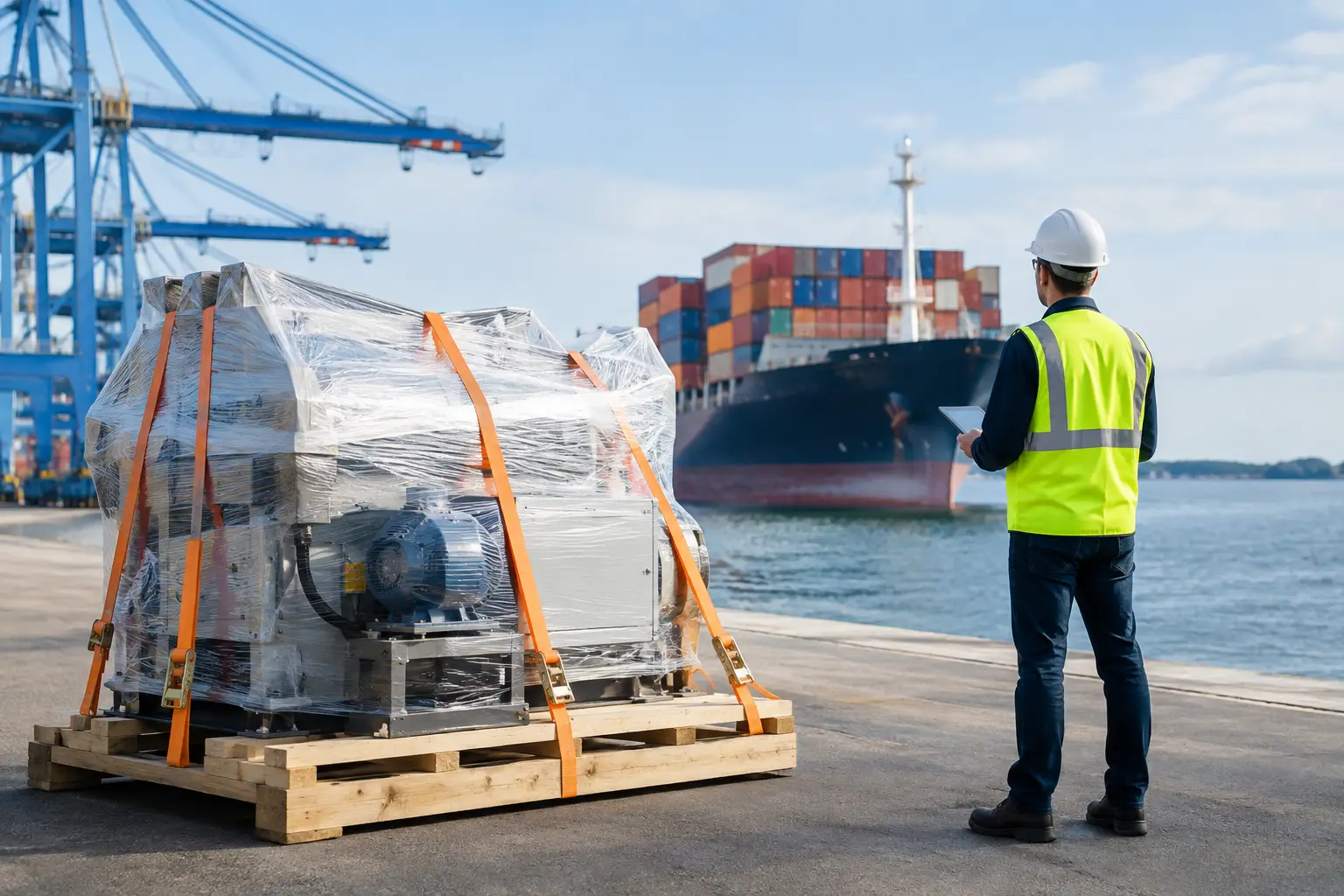
A machine can be ready to leave your facility in Toronto, Montreal, Calgary, or Vancouver and still face expensive delays before it reaches South America. Shipping machinery to South America is not simply a matter of booking space on a vessel or aircraft. Dimensions, weight distribution, crating, export records, import rules, port access, and final delivery all affect the route, cost, and timing.
For commercial shippers, contractors, manufacturers, and businesses replacing equipment overseas, the right freight plan protects both the machinery and the project it supports. The goal is not just to move a piece of equipment. It is to deliver it in usable condition, with the documents needed to clear customs and a delivery plan that works at the destination.
Start With the Machinery, Not the Freight Rate
A freight quote should be based on accurate shipment details. A low price offered before the equipment is measured, inspected, or properly described can change quickly once the carrier identifies oversize dimensions, dangerous goods components, or special handling requirements.
Before arranging transport, confirm the machine’s length, width, height, gross weight, and center of gravity. Include every detachable item that will travel with it, such as control panels, blades, hoses, attachments, spare parts, and tool kits. A skid steer with a bucket removed is a different shipment from a fully assembled unit. The same applies to manufacturing equipment that can be dismantled into sections.
Photos are equally useful. They help determine whether the machinery can be loaded into a standard ocean container, requires a flat rack, needs roll-on/roll-off service, or should move as breakbulk cargo. For smaller but time-sensitive equipment, air freight may be practical, although the cost is usually much higher than ocean transport.
It also matters whether the machinery is operational. Drained fluids, disconnected batteries, fuel levels, and loose parts can affect carrier acceptance. Equipment with fuel, oil, hydraulic fluid, batteries, or refrigerants may require additional declarations and preparation. This does not mean it cannot ship. It means the shipment needs to be assessed correctly before pickup.
Choose the Right Method for Shipping Machinery to South America
Ocean freight is generally the most economical choice for heavy machinery traveling from Canada to South America. It works especially well when delivery timelines allow for port handling, sailing schedules, customs clearance, and inland transport after arrival.
Container Freight for Compact Equipment
A standard or high-cube container can protect machinery from weather and reduce handling during transit. This option suits equipment that fits safely inside after accounting for blocking, bracing, and access for loading. The machinery may be loaded at a warehouse, a port facility, or sometimes at the shipper’s location when conditions allow.
Container shipping is often a good fit for machine tools, compact industrial equipment, generators, pumps, packaging machinery, and crated components. The trade-off is size. If the equipment exceeds container dimensions, forcing it into an unsuitable packing plan can create damage risk and added handling costs.
Flat Rack, Open Top, and Breakbulk Options
Oversize or irregular machinery may need a flat rack or open-top container. A flat rack is useful when equipment is too wide or too tall for a conventional container but can be secured safely to a platform. Open-top equipment can be loaded from above, which is helpful for tall machinery or items that require crane loading.
For very large industrial units, construction equipment, or project cargo, breakbulk shipping may be the appropriate solution. The machine is loaded directly onto the vessel rather than inside a container. This can handle exceptional dimensions, but it requires detailed engineering, secure lashing, coordinated port handling, and careful scheduling.
Air Freight When Time Has a Higher Value
Air freight is not usually the first choice for heavy machinery, but it can make sense for urgent replacement parts, specialized components, compact high-value units, or equipment needed to avoid a costly production shutdown. The decision depends on the machine’s chargeable weight, dimensions, destination airport capability, and the cost of downtime.
A dependable freight forwarder will explain the practical difference rather than pushing one mode for every shipment. The best route may combine ocean or air transport with trucking and local delivery to reach the final site.
Prepare Machinery for Handling and Transit
International transport exposes machinery to vibration, lifting, moisture, changing temperatures, and repeated handling. Proper preparation is part of the freight process, not an optional extra.
Clean the equipment before shipment, particularly if it has been used in construction, agriculture, mining, or industrial environments. Soil, plant material, grease buildup, and residue can trigger inspections or quarantine concerns in some countries. Remove personal items and unsecured tools from cabs, compartments, and storage areas.
Moving components should be locked, tied down, or otherwise secured. Protect sensitive controls, screens, electrical connections, and exposed hydraulic fittings. Depending on the machinery and route, export packing may include heat-treated wooden crating, shrink wrapping, corrosion protection, moisture barriers, blocking, bracing, and marine-grade lashing.
Do not treat packaging as a generic line item. A crated precision machine has different needs from a used excavator or a palletized production line. The packing method should support the equipment’s weight and handling points while allowing customs officers or destination teams to access documents and serial numbers if needed.
Get the Documents Right Before Departure
Customs issues often begin with incomplete descriptions. Calling an item simply “machinery” on a commercial invoice may not be enough. Customs authorities need to know what the machine is, what it does, its condition, country of manufacture, value, serial number where applicable, and the appropriate tariff classification.
Most commercial shipments require a commercial invoice and packing list. Depending on the route and equipment, additional records may include export declarations, certificates of origin, bills of lading or air waybills, insurance documentation, dangerous goods paperwork, and permits or technical certificates requested by the destination country.
Used machinery deserves extra attention. Some South American countries have restrictions, age limits, inspection requirements, or special import procedures for used equipment. Engines, emissions-related components, radio equipment, batteries, and machinery used in food processing or agriculture may also face additional requirements.
Import rules are country-specific. Procedures for Brazil may differ significantly from those in Colombia, Chile, Peru, Argentina, Ecuador, Uruguay, or Paraguay. A shipment should be reviewed against the rules of the actual destination, not assumptions based on a nearby market.
Plan for Customs Clearance and Final Delivery
Port arrival is not the same as delivery. Once the machinery lands at a South American port or airport, it may need customs entry, inspections, terminal release, local trucking, and specialized unloading before it reaches the buyer, warehouse, construction site, or production facility.
Ask early who will act as the importer of record and who is responsible for duties, taxes, brokerage charges, demurrage, storage, and inland delivery. These costs can vary based on the machine’s classification, declared value, trade terms, and destination regulations. Clear responsibilities prevent disputes after the cargo is already on the ground.
Final-mile planning is particularly important for heavy equipment. Confirm whether the destination has a loading dock, forklift, crane, ramps, sufficient road access, and a team authorized to receive the shipment. A machine that reaches the local terminal but cannot be unloaded at the job site can generate avoidable storage and redelivery charges.
Work With One Accountable Freight Partner
International machinery transport involves more than carrier space. It requires coordination between pickup teams, packing crews, ports, ocean or air carriers, customs contacts, warehouses, and local delivery providers. Managing these parties separately can leave the shipper responsible for gaps in communication.
E-Cargo Inc. coordinates tailored freight arrangements from major Canadian cities for machinery and commercial cargo moving to South America. Each shipment is reviewed around its equipment type, dimensions, required service level, route, customs needs, and delivery location so that the transport plan reflects the actual job.
Provide complete equipment details as early as possible, including photographs, measurements, machine value, destination address, and required delivery date. This gives the freight team the information needed to recommend the right equipment, packing approach, and transport mode.
When machinery is needed for a project, a production line, or a customer commitment, the cheapest-looking route is not always the lowest-cost outcome. A well-planned shipment protects the equipment, supports customs clearance, and gives every party a clearer path from pickup in Canada to delivery in South America. Get a Quote Now and start with the details that matter.