
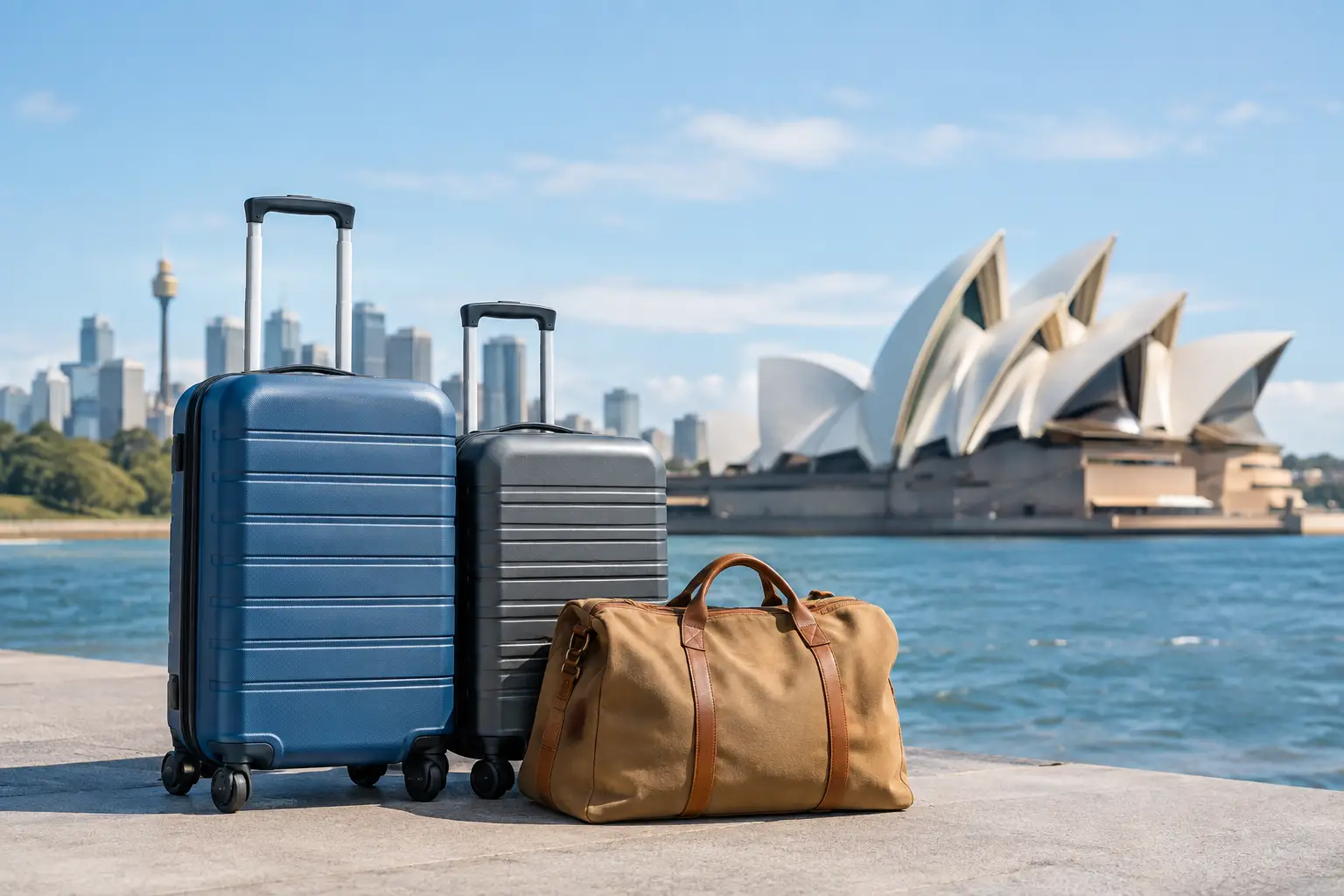
A second checked bag can look inexpensive until airline weight limits, oversized-baggage fees, airport handling, and tight connection rules are added up. For students, relocating families, and travelers carrying more than a few suitcases, shipping luggage to Australia from Canada can be the more practical choice. The right method depends on how much you are sending, when you need it, and whether the contents can pass Australia’s strict biosecurity controls.
Australia is a long-distance destination with detailed import requirements. Sending luggage is not simply a matter of attaching a label and booking transport. A successful shipment needs the correct transport mode, a clear inventory, secure packing, and customs documentation that accurately describes what is inside.
When shipping luggage makes more sense than flying with it
Airline excess baggage may work for one additional bag needed immediately at your destination. It becomes less attractive when you are sending several large suitcases, sports equipment, boxed personal effects, or belongings for a long stay. Charges can increase quickly by route, size, and weight, and airlines may not accept every item as checked baggage.
Freight shipping gives you more flexibility. You can arrange collection before your departure, send items to a residential address in Australia, and separate essential travel items from belongings that can arrive later. This is particularly useful for Canadians relocating to Sydney, Melbourne, Brisbane, Perth, Adelaide, or regional destinations where carrying everything through airports is not realistic.
The trade-off is timing. Air freight is faster but generally costs more than ocean freight. Ocean freight is often better for larger volumes, but it requires more planning and a longer transit window. A tailored quote should consider the actual weight and dimensions, pickup city, delivery address, packing requirements, and customs clearance needs.
Air freight or ocean freight for luggage to Australia?
Choose air freight for time-sensitive personal effects
Air freight is usually the best option when luggage must arrive quickly, such as before a university term begins, a new job starts, or a family member travels ahead of a household move. It is suitable for suitcases, cartons, documents, and moderate quantities of personal belongings.
Keep in mind that air freight is priced by either actual weight or volumetric weight, whichever is greater. A large but light suitcase can therefore cost more than expected. Compressing soft goods, avoiding oversized cartons, and using appropriately sized packaging can help control the shipment’s chargeable weight.
Air shipments also have restrictions. Lithium batteries, aerosols, flammable products, and other dangerous goods may be prohibited or require special handling. Do not pack power banks, loose batteries, fuel containers, or pressurized cans into luggage without confirming the rules first.
Choose ocean freight for larger moves and lower cost per volume
Ocean freight is generally the sensible option for multiple suitcases, boxes, and personal effects that do not need to arrive immediately. It can offer better value for a larger move, especially when several items are being shipped together from Toronto, Montreal, Vancouver, Calgary, Edmonton, Mississauga, or another Canadian location.
The planning requirement is greater. Ocean freight schedules, consolidation, port handling, customs processing, and final delivery all affect the total timeline. It is best for customers who can ship in advance and keep a small set of essentials with them while traveling.
For either method, door-to-door coordination reduces the number of parties you need to manage. E-Cargo Inc. can arrange pickup, freight movement, shipping documents, customs support, and delivery coordination so that you are not left piecing together separate carrier, warehouse, and clearance services.
Australia’s biosecurity rules can affect used luggage
Australia takes biosecurity seriously to protect its agriculture, environment, and native ecosystems. Customs and biosecurity authorities may inspect personal effects, particularly used items that could carry soil, plant matter, animal material, or food residue. A suitcase is not exempt simply because it contains personal belongings.
Clean every item before packing. Hiking boots, camping equipment, bicycles, golf clubs, gardening tools, sports gear, and outdoor furniture deserve special attention. Remove visible dirt, seeds, grass, leaves, and pet hair. Wash and dry clothing, wipe down hard surfaces, and make sure bags are free of crumbs or food residue.
Certain items may be restricted, require declaration, or need treatment. These can include food, herbal products, wooden goods, animal products, feathers, untreated natural fibers, seeds, soil-contaminated equipment, and items made with plant materials. Do not hide or vaguely describe these products. An unclear declaration can lead to inspection delays, treatment costs, seizure, or penalties.
Used shoes and outdoor equipment are common causes of questions at inspection. If an item has been used outdoors in Canada or elsewhere, clean it thoroughly and identify it accurately on the packing list. The goal is not to make the shipment look less detailed. The goal is to give authorities a truthful, understandable description of what is being imported.
How to prepare luggage for international shipping
Good preparation protects both the contents and the shipment schedule. Soft-sided luggage can be shipped, but it needs protection from handling during international transit. Where possible, place suitcases in strong outer cartons or have them professionally wrapped and secured. Hard-shell cases may also need external protection to prevent scratches, cracks, or damage to wheels and handles.
Use durable packing materials and avoid overfilling bags. Heavy items should be positioned low and balanced evenly. Fragile belongings should be individually wrapped and cushioned, not placed loosely between clothing. If you are sending valuable or sentimental possessions, consider whether they should travel separately, be professionally packed, or remain with you as carry-on items.
Before collection, prepare the following information:
- A detailed packing list showing the contents of each suitcase or carton
- A realistic declared value for customs and any available proof of ownership
- Your passport or identification details and Australian delivery contact information
- Clear disclosure of food, wood, outdoor equipment, medicines, batteries, and other regulated items
Descriptions such as “personal items” or “miscellaneous” are too broad to be useful. Instead, state what is actually packed: used clothing, books, kitchen utensils, winter boots, children’s toys, or sporting equipment. Clear paperwork gives the customs broker and border authorities a better starting point if questions arise.
Avoid common luggage shipping mistakes
The most costly mistake is waiting until the week of departure. Last-minute shipping limits your transport choices and can force you into expensive air freight. Start planning early, particularly for ocean freight or a move involving several pieces.
Another issue is assuming that a shipment of used personal effects has no customs requirements. Even when goods are not being sold, Australia still requires proper import information and may inspect the shipment. Eligibility for duty or tax treatment can depend on your residency status, how long you owned the goods, the type of items involved, and current regulations. A freight forwarder can explain the documentation process, but final assessment remains with Australian authorities.
Underdeclaring value is also a poor strategy. It can create clearance problems and leave you without adequate protection if a claim is required. Declare accurately, retain receipts for higher-value items where available, and ask about shipment protection options before transit begins.
Finally, do not use luggage shipping as a way to send prohibited items. Dangerous goods, undeclared food, counterfeit products, weapons, and restricted biological materials can cause serious delays and consequences. When uncertain, ask before packing, not after the shipment is already in transit.
Get a quote based on your actual shipment
The most useful quote is built around real details rather than a rough estimate. Provide the number of bags or cartons, dimensions, approximate weight, pickup location in Canada, destination in Australia, preferred timing, and a brief description of the contents. If you need packing, storage, or pickup from a residence, include that as well.
Shipping luggage to Australia is manageable when the shipment is planned around its true size, its delivery deadline, and Australia’s biosecurity requirements. Pack carefully, declare honestly, and arrange transport early enough to choose the option that protects both your budget and your belongings. Get a Quote Now and have one accountable team take charge of the details before your luggage starts its journey.