
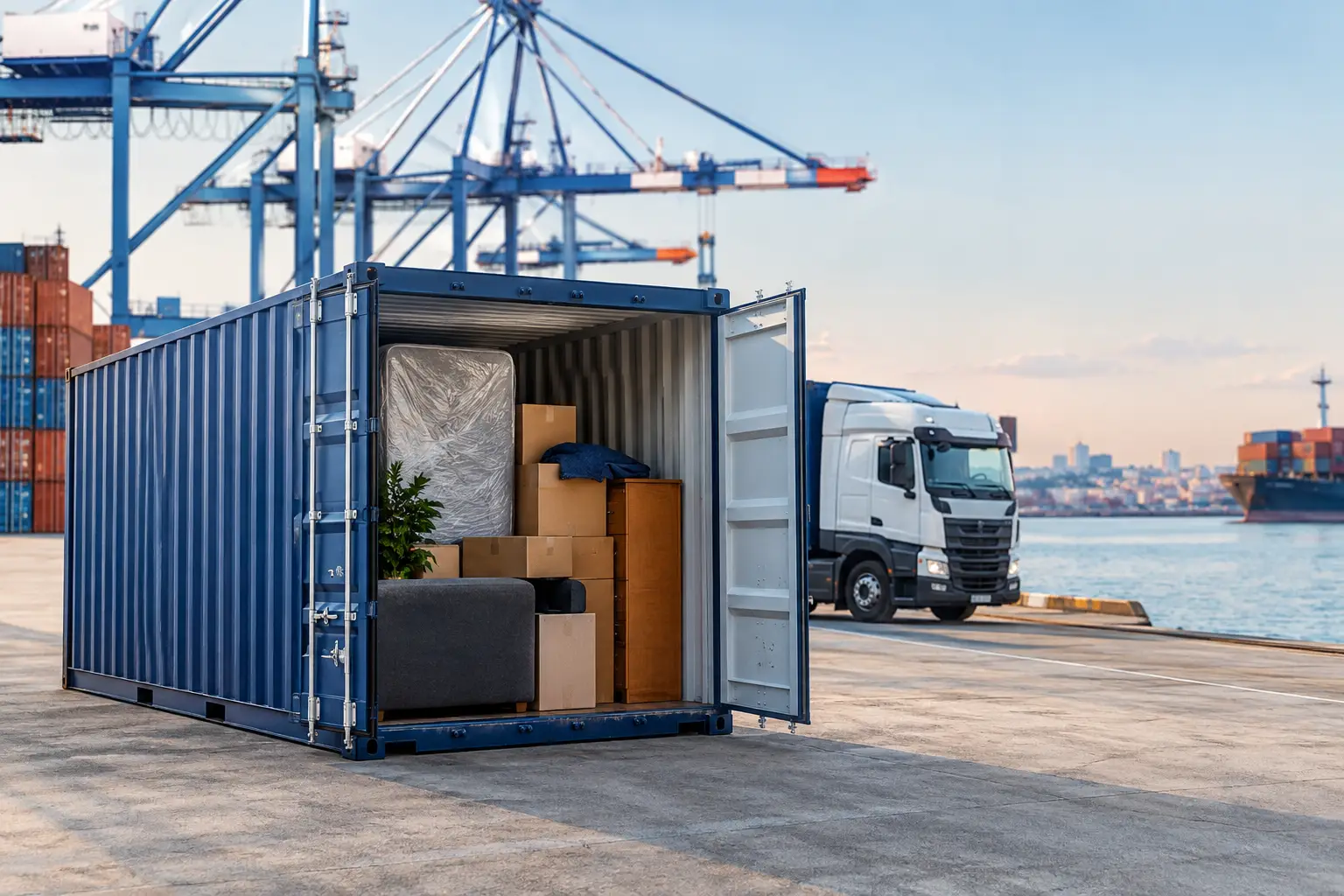
A move that fills a one-bedroom apartment, several pallets, or a large collection of personal belongings often lands in an awkward middle ground: too much for courier boxes, but not enough to justify an entire container. That is where half container shipping options become relevant. While “half container” is a common way to describe the need, it is not always a fixed product offered by ocean carriers. The right arrangement depends on the volume, destination, timing, packing requirements, and how much control you need over the shipment.
For families relocating overseas, students returning home, and businesses moving inventory, the goal is simple: pay for the space you need without creating avoidable customs or delivery problems. A freight forwarder can assess the shipment and arrange the most suitable ocean, air, or combined transport plan.
What Half Container Shipping Usually Means
Most people using the phrase half container are referring to cargo that takes up a significant amount of space but does not fill a standard 20-foot shipping container. A 20-foot container generally holds about 1,170 cubic feet of cargo, although usable capacity changes with the shape of cartons, furniture, crating, and weight limits. Half of that capacity may be roughly 500 to 600 cubic feet, but cargo is rarely packed as neatly as the calculation suggests.
In practice, half container shipping usually falls into one of two arrangements. The first is less-than-container-load freight, commonly called LCL. Your goods are packed, loaded, and shipped in a shared container alongside cargo from other customers. You pay for the volume or weight your shipment occupies, plus applicable handling and destination charges.
The second arrangement is a shared-container or consolidated move planned for customers traveling to the same destination region. This can work well for household goods moving from a major origin city to Europe, Australia, South America, or another overseas market. Availability depends on the route and sailing schedule, so it is not suitable for every destination or deadline.
Half Container Shipping Options Compared
LCL ocean freight for flexible volumes
LCL is often the most practical choice when household goods, excess baggage, cartons, furniture, or commercial cargo occupy less than a full container. Your cargo is received at a warehouse, measured, labeled, and consolidated with compatible shipments before it moves to port. At destination, the container is unpacked and each shipment continues through customs and final delivery.
The advantage is cost control. You are not paying the ocean freight for unused container space. It is especially useful for relocations involving boxes, bicycles, small furniture pieces, and personal effects that total several cubic meters rather than a full household.
The trade-off is handling. LCL freight is handled more than a dedicated container shipment because it must be consolidated and deconsolidated. Professional packing, clear inventory records, and sturdy cartons matter. LCL also usually takes longer than a full-container movement because the freight must wait for consolidation and destination unpacking.
Shared container service for household moves
A shared container service is closer to what many customers imagine when they ask for half a container. Multiple customers share one container, often on a door-to-door moving service. The shipment may be collected from a residence, professionally packed if needed, transported to a consolidation warehouse, and dispatched once the container is ready.
This option can offer better value than sending an entire container for a partial household move. It is a sensible fit for apartments, small homes, expatriate relocations, and personal effects shipments where timing is flexible. It can also simplify coordination because one provider manages pickup, export documentation, ocean transport, customs clearance support, and delivery arrangements.
However, shared-container service is schedule-dependent. If the container is still being filled, your goods may wait before departure. Customers with a fixed move-in date should ask about the estimated consolidation period, sailing date, destination handling, and delivery window before booking.
A 20-foot container for higher-volume or sensitive cargo
Sometimes a shipment that appears to be “half a container” is better sent in a dedicated 20-foot container. This is more likely when the cargo includes fragile furniture, high-value commercial goods, heavy machinery, unusual dimensions, or enough volume that LCL charges approach full-container pricing.
A dedicated container gives you more control over loading, departure planning, and cargo separation. It reduces the handling associated with consolidation and may provide a more predictable transit process. It also makes sense when a shipment is very dense. Ocean freight is priced by volume in many LCL moves, but weight can create separate limitations and charges.
The downside is obvious: you pay for the entire container, whether you use all of it or not. A quote comparison should consider the complete cost, not only ocean freight. Origin drayage, export packing, port charges, customs clearance, destination fees, and final delivery can change the result.
Air freight for time-sensitive partial moves
Air freight is not a container-sharing alternative in the ocean freight sense, but it can be the right answer for a portion of a move. Customers often send essentials by air – documents, clothing, work equipment, electronics, or urgent commercial samples – while the bulk of household goods travels by sea.
This split approach costs more per pound than ocean shipping, but it can make an international move far more manageable. You do not have to wait weeks for necessities, and you avoid paying air freight rates on furniture and other heavy items that can travel more economically by ocean.
How to Choose Between Half Container Shipping Options
The first question is not “How much does half a container cost?” It is “How much cargo do I actually have after packing?” A visual estimate from a living room or garage is often misleading. A shipment should be measured in cubic feet or cubic meters, with the dimensions of crates, sofas, mattresses, machinery, and oversized cartons included.
Next, consider timing. If you need goods delivered shortly after arrival overseas, a shared-container service may require too much flexibility. If you can accept a broader delivery window, consolidation can save money. For commercial freight, inventory needs and customer deadlines may justify a dedicated container even when it is only partly filled.
The nature of the goods also matters. Personal effects, non-perishable household goods, and standard boxed merchandise are commonly suitable for LCL shipping. Antiques, delicate artwork, motorcycles, machinery, hazardous materials, and unusually shaped cargo require more detailed planning. Some goods need custom crating, special declarations, or a dedicated transport method.
Finally, look at the destination requirements. Customs rules can affect what you may ship, which documents are required, whether duties apply, and how quickly goods can be released. Used household goods may qualify for different treatment than commercial imports, but eligibility depends on the destination country and the shipper’s residency status. Never assume personal effects are automatically duty-free.
Packing and Documents Can Protect Your Budget
A partial container shipment has less room for packing mistakes. Loose cartons, weak boxes, and unclear labels create risk during warehouse handling and consolidation. Use double-wall cartons for books and dense household goods, wrap fragile items carefully, and keep the weight of each box manageable. Furniture may need export wrapping or crating, particularly when it includes glass, marble, or delicate finishes.
An itemized packing list is equally important. It should describe what is in each package in plain, accurate language. “Personal effects” alone is rarely enough for customs. List categories such as clothing, kitchenware, books, used furniture, tools, or business equipment, along with quantities and declared values where required.
For international moves, you may also need identification, a visa or residency document, proof of address, a customs declaration, and evidence that goods are used personal belongings. Vehicle and machinery shipments have separate documentation requirements. Getting this right before cargo leaves the origin warehouse is far easier than correcting it after arrival.
Get a Quote Based on the Whole Shipment
The best quote for half container shipping options is one built around real shipment details, not a flat estimate based on a few boxes. Provide pickup location, destination city, approximate ready date, item list, dimensions, photos of oversized pieces, and whether you need packing, storage, customs support, or residential delivery.
E-Cargo Inc. can coordinate tailored transport for personal effects, household goods, commercial cargo, vehicles, and oversized shipments from major Canadian cities to destinations worldwide. A clear plan from the start helps avoid surprise charges, missed paperwork, and the stress of managing multiple carriers yourself.
Before you commit, ask what is included at origin and destination, how the cargo will be packed and handled, what transit window is realistic, and who will guide you through customs requirements. Get a quote now with accurate shipment details, then choose the option that protects both your budget and your peace of mind.