
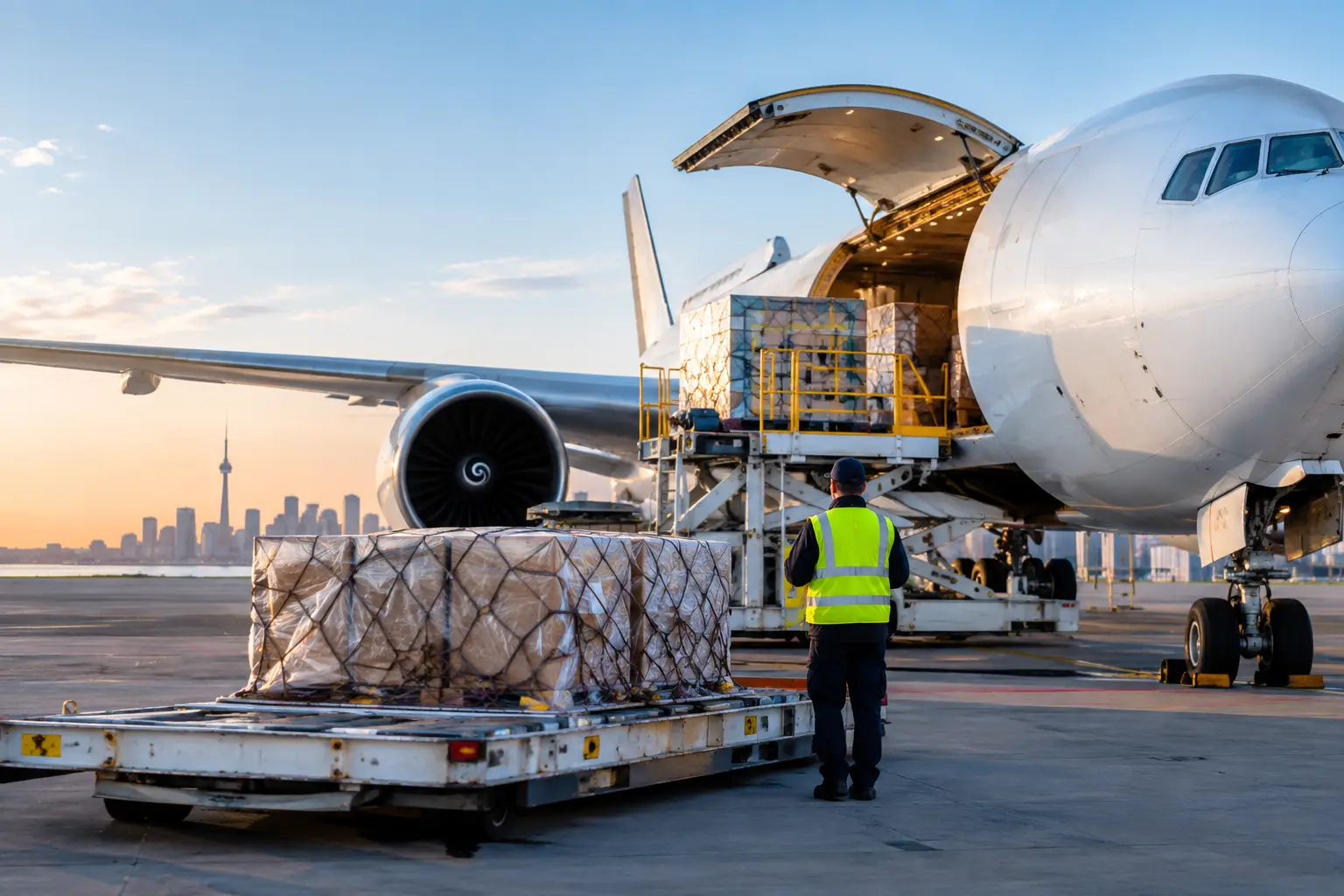
A missed flight connection, an overseas move with a fixed start date, or a customer waiting for essential inventory can turn shipping into a real deadline. Air freight Canada services are built for those moments when speed, shipment control, and reliable handling matter more than choosing the lowest possible transport cost. From extra luggage and personal effects to machinery and commercial cargo, air transport can move goods from major Canadian cities to global destinations quickly when the shipment is properly planned.
The key is choosing air freight for the right reason. It is not automatically the best option for every box, pallet, or household move. It is often the right option when time is limited, cargo is valuable, or an ocean shipment would create too much uncertainty.
What Air Freight From Canada Can Handle
Air freight is more flexible than many first-time shippers expect. It can be arranged for unaccompanied baggage, suitcases, cartons, documents, parcels, household goods, samples, electronics, replacement parts, retail merchandise, industrial equipment, and other commercial cargo. Depending on the shipment size and destination, freight may travel as consolidated cargo with other shipments or as a dedicated booking on a scheduled flight.
For individuals, the common question is whether it makes sense to ship extra baggage rather than pay airline excess-baggage fees. The answer depends on the number of pieces, dimensions, destination, and how urgently the items are needed. A few small bags may be easier to take on your own flight. Multiple cartons, oversized luggage, or items that cannot be checked with an airline may be better handled as freight with pickup, export paperwork, customs coordination, and delivery arranged as one transport plan.
For businesses, air freight is frequently used to protect sales or production schedules. An importer may need a small quantity of stock before a major order is delayed. A contractor may need a replacement component at a job site overseas. In these cases, the higher transportation cost can be justified by avoiding downtime, missed revenue, or a damaged customer relationship.
When Air Freight Canada Makes Financial Sense
Air transport costs more than ocean freight for most larger shipments, but the invoice alone does not tell the full story. The practical comparison is between the total cost of each option, including transit time, storage, packing, customs handling, delivery needs, and the cost of waiting.
Air freight is often a strong choice when the shipment is relatively compact, time-sensitive, high-value, or difficult to replace. It may also be suitable when a move has a firm handover date and personal belongings need to arrive shortly after the traveler does. Shipments from Montreal, Toronto, Vancouver, Calgary, Edmonton, and Mississauga can be routed through major airport gateways to Europe, Australia, South America, and many other destinations.
Ocean freight is usually more economical for a full household move, large volumes of furniture, vehicles, or heavy machinery that does not need to arrive quickly. A mixed approach can also work well. Essential clothing, work equipment, documents, and smaller personal items can go by air, while larger household goods travel by sea. This reduces the pressure to pay airfreight rates for everything while ensuring the items you need first arrive sooner.
Weight Is Not the Only Pricing Factor
Airfreight charges are generally based on chargeable weight. This is the greater of the actual scale weight or the volumetric weight, which reflects the space a shipment occupies on an aircraft. A large but lightweight carton can therefore cost more than expected if it takes up substantial cargo space.
Accurate dimensions matter. Before requesting a quote, measure each package after packing and provide its length, width, height, and weight. Describe the contents clearly and state whether the shipment includes batteries, liquids, food, electronics, new goods, used personal effects, or other regulated items. Complete information makes it possible to select the correct routing and avoid last-minute changes to the rate or booking.
The Documents That Keep Cargo Moving
International air shipments do not move on packing alone. Customs authorities and airlines require paperwork that matches the cargo. For personal effects, this may include identification, a detailed packing list, a destination address, and documents supporting residency or relocation status where required. For commercial goods, the paperwork may include a commercial invoice, packing list, export documents, tariff classification details, and permits for controlled products.
The description of goods should be specific. “Personal items” is not always enough for customs clearance. A useful packing list identifies the item, quantity, approximate value, and condition when relevant. For example, “used clothing,” “used kitchenware,” “one laptop for personal use,” or “new auto parts” gives customs officials more clarity than a broad description.
Destination rules vary widely. Some countries apply different procedures for returning residents, students, temporary workers, and new immigrants. Others restrict certain foods, alcohol, plant materials, animal products, medicines, batteries, or wooden packaging. An item that is ordinary in Canada may require a permit, inspection, or additional declaration abroad. This is why customs planning should happen before freight is collected, not after it reaches the airport.
Preparing Luggage, Personal Effects, and Cargo
Good packing protects the shipment and makes handling more efficient. Use sturdy cartons suited to the item weight, fill empty space to prevent movement, and seal each package securely. Fragile goods need internal cushioning and a clear description on the packing list. Suitcases can be shipped, but hard-sided luggage and protective wrapping are often preferable when baggage will pass through several handling points.
Do not pack prohibited or undeclared goods inside personal effects. Loose lithium batteries, flammable products, aerosols, pressurized containers, corrosive materials, and certain chemicals can create air-transport restrictions. Some items may be accepted only under specific packaging and declaration requirements, while others cannot travel by air at all.
For commercial freight, proper export packaging is equally important. Pallets should be stable, wrapped, and sized to reduce wasted volume. Machinery may need crating, blocking, or moisture protection. If wood packaging is used for an international shipment, it may need to meet destination treatment rules. A shipment that is packed correctly at origin is less likely to face damage, warehouse repacking, or a delay at acceptance.
Choosing the Right Level of Service
Airport-to-airport service can be appropriate for experienced importers or consignees who have their own broker, warehouse, and local delivery arrangements. It can be less suitable for travelers, families, and first-time shippers who do not want to manage arrival notices, clearance steps, terminal collection, and local transportation themselves.
Door-to-door air freight adds coordination, but it also reduces handoffs for the customer. Pickup can be arranged from a home, office, warehouse, or other location in Canada. The shipment is prepared for export, routed through air transport, cleared according to destination requirements, and delivered to the final address where service is available. This approach is especially useful for people relocating abroad or sending goods to relatives who may not be comfortable dealing with cargo terminals.
A dependable freight forwarder should explain what is included in the quote and what may be charged separately. Ask about pickup, packing, export documentation, airline handling, customs clearance, duties and taxes, destination delivery, storage, and any remote-area fees. The least expensive quote is not necessarily the lowest final cost if important steps have been left out.
Timing, Tracking, and Realistic Expectations
Air transport is fast, but shipment time is more than flight time. Cargo must be collected, checked, accepted by the airline, loaded, transferred if necessary, cleared through destination customs, and scheduled for delivery. A direct flight may shorten transit, but customs inspections, incomplete paperwork, public holidays, weather, and destination delivery capacity can still affect the final arrival date.
The best way to protect timing is to provide accurate information early and avoid packing surprises. Book before a critical deadline, especially during peak travel seasons and holiday periods. If delivery must happen by a particular date, communicate that requirement at the quote stage so routing and service level can be planned accordingly.
E-Cargo Inc. coordinates air freight from Canada with hands-on attention to pickup, documentation, routing, customs requirements, and final delivery. Whether you are sending excess baggage to France, moving personal effects to Australia, or shipping urgent commercial cargo abroad, one accountable transport plan can make the process far more manageable.
Before you ship, gather your package measurements, item list, pickup location, destination address, and target delivery date. Then request a detailed quote and ask the questions that matter for your shipment. Get a Quote Now and give your cargo the time, handling, and customs preparation it deserves.