
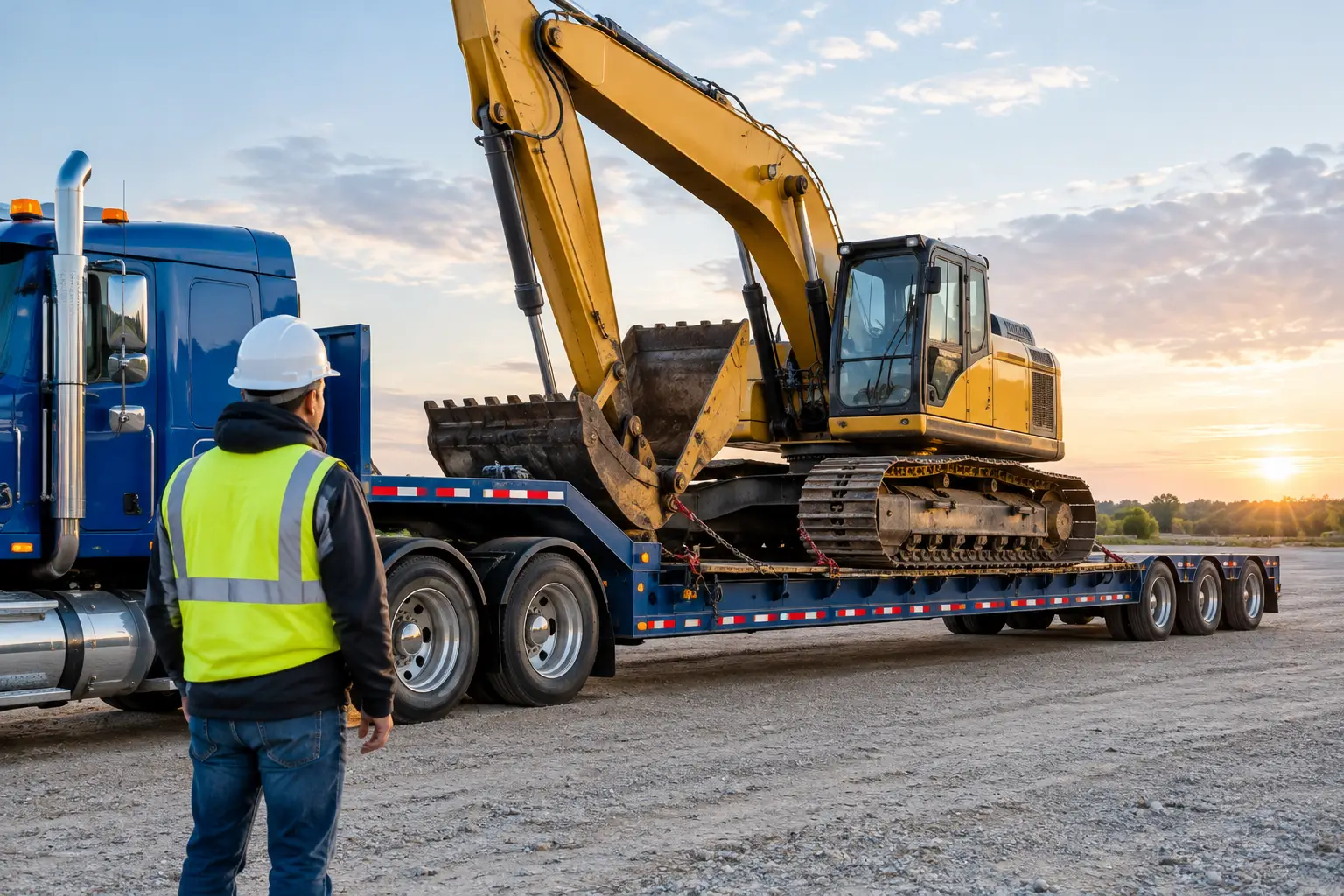
A machine that is ready to leave your site can still become a costly problem before it reaches the truck. An excavator with a loose boom, a production line without an accurate packing list, or a crated generator held at the border can delay a project for days. Machinery transport is not simply booking freight. It is a coordinated process of measuring, securing, documenting, routing, clearing, and delivering valuable equipment with clear responsibility at every step.
For businesses, contractors, importers, and individuals moving equipment internationally, the best transport plan starts well before pickup. The equipment itself, its condition, its destination, and its final use all affect the transport method, cost, and customs requirements.
Machinery Transport Starts With the Right Details
A useful quote depends on accurate shipment information. Weight alone is not enough. Freight providers need the overall dimensions, including attachments, the center of gravity where relevant, whether the machinery rolls or requires lifting, and whether it is operating, non-running, partially dismantled, or packed in a crate.
Photos are equally valuable. They help identify lifting points, exposed components, tracks, tires, hydraulic arms, fragile controls, and any special loading needs. A machine that fits on a standard flatbed may require very different handling from one that is over-height, over-width, or unable to move under its own power.
The destination changes the plan as well. Moving a compact commercial machine from Montreal to the United States may be handled by road freight. Shipping agricultural, construction, manufacturing, or industrial machinery from Toronto, Vancouver, Calgary, or Mississauga to Europe, Australia, South America, or another overseas market often requires ocean freight, port handling, and delivery arrangements at destination. Urgent high-value components may be suitable for air freight, but air transport has strict size, weight, and dangerous-goods limits.
Choosing the Right Machinery Transport Method
There is no single best option for every shipment. The right mode depends on delivery timing, budget, machinery dimensions, and how easily the unit can be secured.
Road Freight for Canada and Cross-Border Moves
Road transport is practical for domestic Canadian deliveries and many Canada-U.S. routes. Depending on the machinery, transport may use a flatbed, step-deck, lowboy, enclosed trailer, or specialized heavy-haul equipment. Low-clearance machines and tall loads need close attention to bridge clearances, route permits, and loading angles.
Door-to-door road service can reduce handling because the machine is loaded at origin and taken directly to the receiver or a planned terminal. However, oversized loads may require permits, escort vehicles, restricted travel hours, or a route that is longer than the map suggests. These requirements affect both timing and price.
Ocean Freight for Heavy or Large Equipment
Ocean freight is often the most economical method for machinery moving overseas. Smaller equipment, parts, or dismantled units may travel in a shipping container. Larger machines may be shipped on a roll-on/roll-off vessel if they can be driven or towed safely, or as breakbulk or flat-rack cargo when they exceed standard container dimensions.
Container shipping can offer more protection from weather and port exposure, especially for machinery with sensitive electronics or loose accessories. It may also require partial dismantling to fit within container limits. Flat-rack and breakbulk options allow larger dimensions but involve more specialized lashing, terminal handling, and coordination. The lower base rate is not always the lowest total cost, so the loading and destination delivery plan should be reviewed before choosing a service.
Air Freight for Urgent Machinery and Parts
Air freight is generally best for smaller equipment, essential production components, replacement parts, and time-sensitive tools. It is fast, but the price rises quickly with size and chargeable weight. Heavy machinery is rarely a fit unless downtime creates a greater cost than the freight itself.
For air shipments, precise crating matters. The packaging must protect the equipment, allow safe forklift handling, and comply with airline security and cargo acceptance rules. Batteries, fuel residue, oils, aerosols, and other regulated materials require particular attention.
Prepare Equipment Before Pickup
Proper preparation protects the machinery and prevents avoidable freight delays. Before pickup, equipment should be cleaned thoroughly, particularly when it has been used in agriculture, construction, mining, or outdoor work. Soil, plant material, insects, and debris can trigger inspection issues at international borders. Many countries take biosecurity rules seriously, and a unit that appears clean can still be delayed if mud is trapped in tracks, wheel wells, undercarriages, or attachments.
Fluids and batteries also need review. Fuel is commonly reduced or drained according to the carrier and shipping method. Hydraulic systems, engine oil, coolant, and batteries may need to be declared or prepared in a specific way. Never assume that a machine can be delivered to a terminal in its regular operating condition and accepted without question.
Movable parts should be secured. Booms, blades, buckets, doors, covers, removable controls, and accessories need protection against vibration and shifting. If the machinery will be crated, use strong materials designed for the weight and lifting method. The crate is part of the transport system, not just a box around the machine.
Documents Can Decide Whether Freight Moves
International machinery transport relies on paperwork that matches the actual shipment. At a minimum, the shipment may require a commercial invoice, packing list, shipper and consignee details, machine description, value, country of origin, and serial number. Used machinery may also need proof of ownership, purchase documentation, or export clearance documents depending on the route and equipment type.
Descriptions should be specific. “Machine” is not enough for customs purposes. A description such as “used diesel-powered skid steer loader, serial number X, with bucket attachment” gives customs authorities and carriers a clearer basis for classification and review. Correct commodity classification influences duties, taxes, permits, and entry requirements.
The final destination matters more than the port. Equipment entering a country may need to meet local standards for emissions, safety, sanitation, electrical systems, or road use. A machine that clears into one country may still require special documentation before it can be delivered or registered for use. This is why customs planning should begin before the freight is collected, not after it has reached the port.
Plan for Loading, Delivery, and Insurance
A freight plan is incomplete if it only covers the ocean or air portion. Consider who will load the machine at origin, whether a forklift or crane is available, and who will unload it at destination. A receiver without the right equipment can face storage charges while trying to arrange a lift.
Access is another practical concern. Narrow roads, soft ground, low overhead wires, limited turning space, and jobsite rules can make a standard delivery impossible. Share these details early so the delivery vehicle can be selected correctly.
Cargo insurance should also be discussed before dispatch. Carrier liability can be limited and may not match the actual value of industrial equipment. Insurance options depend on the commodity, route, packing method, and declared value. Clear photos and a condition report taken before pickup can be helpful if a claim ever needs to be reviewed.
Work With One Accountable Freight Partner
Coordinating a machinery move often means dealing with carriers, terminals, customs paperwork, packaging, inland trucking, and destination agents. When these steps are handled separately, it becomes harder to see where responsibility lies if a document is missing or a pickup changes.
E-Cargo Inc. coordinates tailored machinery transport from major Canadian cities to international destinations, with support for road, ocean, and air freight planning, customs documentation, packing, and delivery arrangements. A detailed quote should reflect the machine, route, timing, loading requirements, and clearance needs rather than relying on a one-size-fits-all rate.
Provide your equipment details early, ask what is included at both origin and destination, and confirm the delivery plan before freight is booked. Get a Quote Now and move your machinery with a plan that protects the equipment, the schedule, and the people depending on both.