
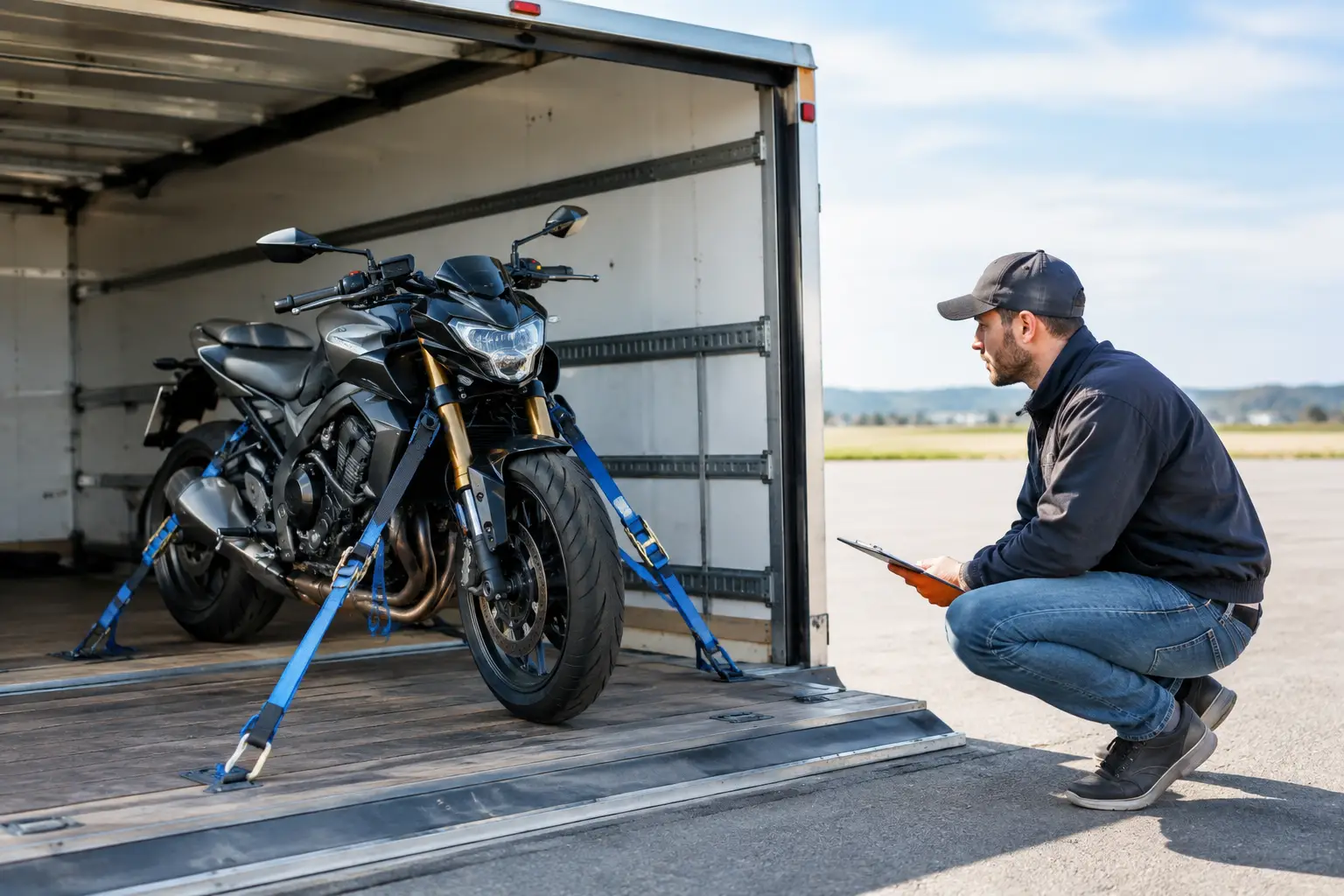
A motorcycle is not just another oversized shipment. It may be your daily transportation after an international move, a carefully restored classic, or the machine you plan to ride when you arrive. Shipping a motorcycle safely means getting the transport method, export paperwork, customs rules, and final delivery plan right before it leaves your driveway.
The lowest initial price is not always the lowest total cost. A quote that excludes crating, terminal handling, customs clearance, destination charges, or inland delivery can become expensive quickly. The right plan is built around your motorcycle, your destination, your available timeline, and the condition in which you expect it to arrive.
Start With the Destination, Not the Transport Mode
Many people begin by asking whether air freight or ocean freight is cheaper. That matters, but the destination country should come first. Every country has its own rules for vehicle imports, temporary entry, emissions compliance, registration, duties, taxes, and required ownership documents.
If you are moving permanently, the motorcycle may be treated as an imported vehicle and subject to local registration standards. If you are traveling or residing abroad temporarily, a temporary import permit may be possible. These are very different clearance paths. A bike that can enter for a short trip may not be eligible for permanent import without modifications, inspections, or substantial duties.
Before booking transport, confirm whether the destination accepts your motorcycle’s year, make, model, and engine configuration. Ask what documents are required at arrival, who must be listed as the importer, and whether the motorcycle needs to be collected from a port, airport, or bonded warehouse. These details shape the shipment from the start.
Choosing the Best Method for Shipping a Motorcycle
Ocean freight is often the practical choice when cost matters more than speed. It is commonly used for international moves from cities such as Montreal, Toronto, Calgary, Vancouver, Edmonton, and Mississauga to Europe, Australia, South America, and other overseas destinations. Transit can take several weeks, particularly when inland trucking, port schedules, and customs clearance are included.
A motorcycle can travel in a shared container, also called consolidated freight, or in a dedicated container. Consolidation generally costs less because space is shared with other shipments. A dedicated container offers more control and can make sense for multiple motorcycles, household goods, or high-value equipment moving together.
Air freight is the faster option, often suitable when a rider has a fixed departure date, a motorcycle is needed for an event, or ocean transit would disrupt a relocation schedule. The trade-off is cost. Air freight rates are based heavily on chargeable weight and dimensions, so a properly designed crate matters. A larger crate can increase the freight charge even if the motorcycle itself is relatively light.
Some routes may offer roll-on/roll-off service, where vehicles are secured inside a vessel rather than loaded into a container. This can be convenient for eligible port-to-port movements, but it may provide less protection from handling and may limit what can travel with the motorcycle. Availability varies by route, origin port, destination port, and vessel operator.
Crating and Preparation Protect the Motorcycle
International carriers and terminals need the motorcycle secured for transport, not merely covered. The bike should be professionally restrained so it cannot shift, tip, or make contact with other freight. A purpose-built crate or reinforced palletized frame is often the best approach, especially for air freight or container consolidation.
Preparation normally includes reducing the fuel level, checking for leaks, disconnecting or securing the battery as required, and disabling alarms that could activate in transit. Requirements differ by carrier and transport mode. Lithium batteries, fuel vapors, and certain accessories can trigger dangerous-goods rules, so do not assume that preparation standards are the same for every shipment.
Remove loose items such as helmets, riding gear, GPS units, detachable saddlebags, and personal belongings unless the freight provider confirms they are permitted. Shipping personal effects inside a motorcycle can cause customs delays, create inventory issues, or affect insurance coverage. It may be better to send riding gear and personal items as separately packed personal effects.
Take clear photographs before collection or delivery to the warehouse. Photograph all sides of the motorcycle, the odometer, existing scratches, accessories, and keys. A written condition report gives you a reliable record if there is a question during transit or at destination release.
Documents That Keep the Shipment Moving
Documentation is where many international motorcycle shipments slow down. The exact requirements depend on the route, but proof of ownership is central. You may need the original title or registration, a bill of sale, passport identification, and a signed authorization allowing the freight forwarder or customs broker to act on your behalf.
For exports from Canada, authorities and carriers may require advance submission of vehicle ownership information. For imports, the destination country may require a commercial invoice, packing list, value declaration, import permit, or customs entry documents. If there is a lien on the motorcycle, obtain written approval from the lender before arranging international transport.
Be precise about the motorcycle’s declared value. An unrealistic value can lead to customs scrutiny, delayed clearance, or problems if a claim is needed. Customs agencies may assess duty and tax using their own valuation methods, particularly for collector bikes, modified motorcycles, or vehicles purchased recently at a private sale.
A freight forwarder should explain what is included in the shipping quote and what remains payable at destination. Port storage, inspections, duty, tax, local registration, and remote-area delivery are not always included in an origin-to-port rate. Clear expectations protect your budget and prevent your bike from sitting at a terminal while charges accumulate.
Plan the Timeline Around Customs and Delivery
The sailing or flight time is only one part of the schedule. Your motorcycle may need to be collected, crated, delivered to a terminal, accepted by the carrier, loaded, unloaded, cleared through customs, and released for final transport. Congested ports, weather disruptions, inspection holds, and missing paperwork can add time even when the carrier is operating on schedule.
Give yourself room before a move, a tour, or a work start date. If you need the motorcycle by a specific day, work backward from the date you need it released, not merely the advertised vessel arrival date. This is particularly important for destinations with limited port appointments or strict vehicle inspection procedures.
Door-to-door service can reduce the number of separate providers you need to coordinate. However, access at both addresses matters. A residential street with low wires, tight turns, or no space for a truck may require a warehouse drop-off or alternate collection point. The same issue can affect final delivery abroad.
What a Useful Motorcycle Shipping Quote Should Show
A good quote is tailored, not guessed from a single online rate. To receive an accurate estimate, provide the pickup city, destination city or port, motorcycle make and model, dimensions if available, approximate weight, preferred departure window, and whether you need crating, storage, customs support, or final delivery.
Ask whether the quote includes pickup, export handling, crating, carrier transport, destination terminal charges, customs brokerage, and delivery. You should also understand what happens if the shipment is delayed, the motorcycle arrives before you do, or documents need correction after it reaches the destination.
E-Cargo Inc. coordinates motorcycle transport as part of a broader international freight process, helping customers manage packing, shipping mode, customs documentation, and delivery arrangements without having to chase multiple transport providers. That single point of responsibility is especially valuable when a move also includes luggage, household goods, or other personal effects.
The best time to solve a shipping problem is before the motorcycle is loaded. Gather your ownership documents, confirm the import rules, choose protection that fits the route, and request a detailed quote early. Then you can focus on the road ahead instead of trying to locate your motorcycle from another country. Get a Quote Now.